
Learning the Quran online has become a convenient option for children, adults, and families who want to improve their Quranic knowledge from home. Online Quran academies offer different learning arrangements, including individual classes, group lessons, Tajweed courses, Quran reading, memorisation, and Islamic studies. However, before enrolling, many students want to understand what their tuition actually covers.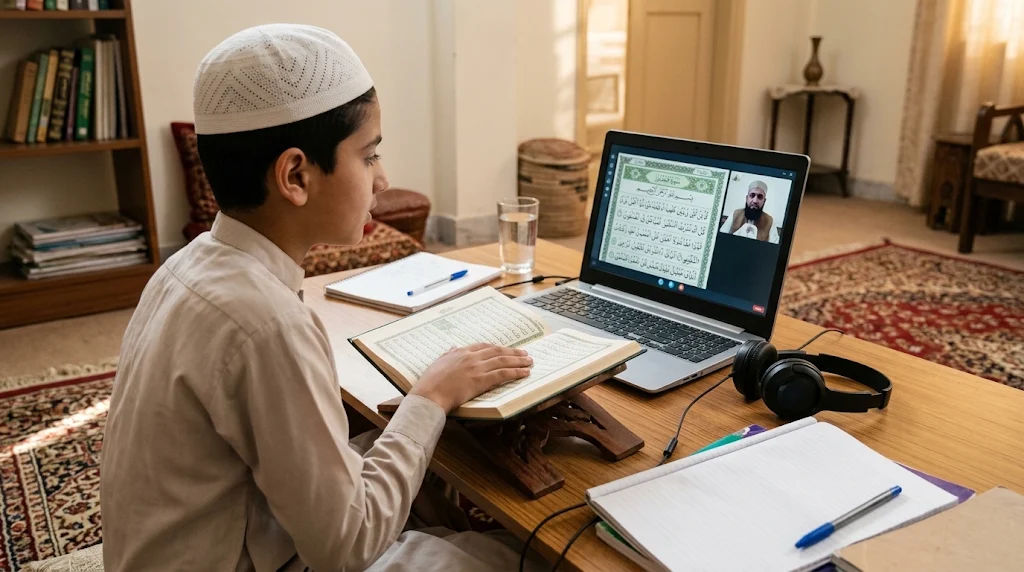
One important question is whether individual instruction is included in the monthly tuition or charged separately. Understanding online quran academy fees helps students compare different academies, select suitable learning plans, and avoid unexpected expenses. Some academies include private lessons in their standard packages, while others offer one-to-one instruction as a premium service.
The answer depends on the academy, course structure, number of weekly classes, lesson duration, and teacher availability. Therefore, students should understand the available packages before making a payment. This comprehensive guide explains how online Quran academies structure their fees, what individual lessons include, and how to choose a suitable learning arrangement.
How Online Quran Academies Structure Their Fees
Online Quran academies generally organise their tuition according to the type of course and teaching arrangement. Students can usually choose between individual lessons and group sessions.
Each arrangement has different advantages, and the cost often reflects the amount of personal attention provided by the teacher.
What Are Online Quran Academy Fees?
Tuition charges are the payments students make to receive Quranic education through an online learning platform. These charges may cover teaching sessions, learning materials, progress assessments, and access to educational resources.
Different academies have different pricing structures. Some charge monthly, while others offer packages based on the total number of classes.
Common factors affecting tuition include:
-
Number of classes per week.
-
Duration of each lesson.
-
Teacher experience and qualifications.
-
Individual or group teaching arrangements.
-
Type of Quranic course.
-
Additional learning resources.
-
Availability of flexible class timings.
Students should examine these factors instead of comparing prices alone.
Are Private Lessons Part of Standard Packages?
Some academies include private instruction in their regular tuition packages. In these arrangements, one student receives instruction from one teacher during a scheduled session.
Other institutions separate private and group learning plans. Students who want individual attention may need to select a more expensive package.
For this reason, it is important to ask the academy whether the advertised price includes exclusive teacher attention.
A package described as a Quran learning programme does not automatically mean that every class is conducted individually.
What Does One-to-One Quran Learning Mean?
One-to-one Quran learning is an educational arrangement in which a teacher works directly with one student during a lesson.
Instead of dividing attention between several learners, the teacher concentrates on the student's reading, pronunciation, understanding, and progress.
This arrangement is particularly useful for students who prefer personalised instruction.
Individual Attention During Lessons
The biggest advantage of private Quran lessons is direct interaction with the teacher.
Students can read verses, ask questions, repeat difficult words, and receive immediate corrections.
For example, a beginner learning Arabic letters may need additional practice with pronunciation. An individual teacher can identify areas that require improvement and adjust the lesson accordingly.
This makes the learning experience more focused.
Learning According to Individual Ability
Every student learns at a different pace. Some people understand Arabic pronunciation quickly, while others need additional time and repetition.
Private lessons allow teachers to adjust their teaching methods according to individual ability.
A beginner may start with basic Arabic letters, while a more experienced learner may concentrate on Tajweed rules or memorisation.
This flexibility is one reason many families prefer individual Quran classes.
Personalised Feedback and Progress Monitoring
Another important feature of one-to-one instruction is regular feedback.
Teachers can identify mistakes, explain corrections, and monitor improvement throughout the course.
Students can also discuss their learning difficulties without worrying about interrupting a group lesson.
When comparing online quran academy fees, students should check whether progress monitoring and individual feedback are included.
What Is Usually Included in Private Quran Lesson Packages?
The services included in private learning packages vary between academies. However, several educational features are commonly available.
Qualified Quran Teachers
Many online academies provide access to teachers who have studied Quranic recitation, Tajweed, and Islamic education.
Some teachers also hold recognised qualifications or have completed specialised Quran teaching programmes.
Before enrolling, students should ask about teacher qualifications and teaching experience.
A qualified teacher should be able to explain lessons clearly, identify pronunciation mistakes, and provide appropriate guidance.
Scheduled Individual Classes
Private packages generally include a specific number of weekly lessons.
For example, an academy may offer three, four, or five sessions per week, depending on the selected programme.
The duration can also vary. Some lessons last 20 minutes, while others may continue for 30 or 45 minutes.
Students should confirm the exact schedule before purchasing a package.
Quran Reading and Tajweed Practice
Many private Quran programmes include reading practice and pronunciation correction.
Students learn how to recognise Arabic letters, connect words, and pronounce Quranic verses correctly.
More advanced courses may introduce Tajweed rules, including:
-
Makharij, or the articulation points of Arabic letters.
-
Sifaat, or the characteristics of letters.
-
Rules of Noon Sakinah and Tanween.
-
Rules of Meem Sakinah.
-
Madd, or the rules of elongation.
-
Proper stopping and starting during recitation.
The exact subjects depend on the student's level and chosen course.
Regular Assessments
Some academies provide periodic assessments to evaluate student performance.
These assessments may involve reading selected passages, demonstrating Tajweed rules, or reviewing memorised portions.
Teachers can use the results to identify areas that need further practice.
However, students should confirm whether assessments are included in the standard package or offered as an additional service.
Do One-to-One Lessons Cost More Than Group Classes?
In many academies, individual instruction costs more than group learning.
This is mainly because a private teacher dedicates the entire lesson to one student rather than teaching several students simultaneously.
However, pricing arrangements are not identical across institutions.
Why Private Classes May Have Higher Fees
Private classes require dedicated teaching time.
The teacher cannot divide the scheduled session among multiple learners, which means the academy must account for individual instruction when calculating its charges.
Other factors may also affect the price:
-
Teacher qualifications and experience.
-
Lesson frequency.
-
Class duration.
-
Course difficulty.
-
Flexible scheduling.
-
Additional educational support.
Some academies offer affordable private packages, while others charge premium rates for experienced instructors.
Why Group Classes Can Be More Affordable
Group lessons allow academies to teach several students during the same session.
The teaching cost is distributed among participants, making this arrangement less expensive in many cases.
Group classes can also provide opportunities for discussion and shared learning.
However, students may receive less individual speaking time and may need to wait for personal corrections.
Comparing the Two Learning Arrangements
|
Feature |
One-to-One Lessons |
Group Lessons |
|---|---|---|
|
Teacher attention |
Individual |
Shared |
|
Learning pace |
Personalised |
Generally structured |
|
Pronunciation correction |
Direct |
Shared among students |
|
Class interaction |
Student and teacher |
Multiple students |
|
Scheduling |
Often flexible |
Usually fixed |
|
Cost |
Often higher |
Often lower |
Neither arrangement is automatically better for everyone.
The right choice depends on learning preferences, available time, budget, and educational goals.
Factors That Affect Online Quran Academy Fees
Understanding pricing factors helps students make informed decisions.
Instead of choosing the cheapest programme immediately, it is better to examine what each academy provides.
Number of Weekly Lessons
The number of classes usually has a direct effect on monthly tuition.
A student attending two sessions per week may pay less than someone attending five sessions.
More frequent lessons can provide additional opportunities for revision and practice.
However, students should choose a schedule they can maintain consistently.
Duration of Each Class
Lesson length is another important factor.
A 20-minute session may be suitable for young beginners, while older students may prefer longer classes.
Some academies offer different packages according to lesson duration.
When reviewing online quran academy fees, students should calculate the total monthly teaching time rather than focusing only on the advertised monthly amount.
Teacher Experience
Teacher qualifications and experience may influence tuition charges.
An experienced teacher with specialised Tajweed knowledge may charge more than a general beginner-level instructor.
However, higher prices do not automatically guarantee better teaching.
Students should consider teaching quality, communication skills, qualifications, and student feedback.
Course Selection
Different Quranic courses require different teaching approaches.
For example, basic Quran reading may have a different pricing structure from advanced Tajweed or Hifz programmes.
Courses may include:
-
Noorani Qaida.
-
Quran reading.
-
Quran memorisation.
-
Tajweed.
-
Quran translation.
-
Basic Islamic studies.
-
Quranic Arabic.
Students should select a course that matches their existing knowledge and learning objectives.
Are Trial Lessons Included in Academy Fees?
Many online Quran academies provide trial classes before students purchase a full package.
These sessions allow learners to experience the teaching method and evaluate whether the instructor is suitable.
However, trial lesson policies differ between institutions.
Free Trial Classes
Some academies provide free introductory sessions.
These lessons may help students understand the online classroom, meet the teacher, and discuss their learning requirements.
A trial can also help parents determine whether a teaching style is appropriate for their children.
Paid Trial Classes
Other institutions charge a small amount for introductory lessons.
This may happen when the academy provides a full individual teaching session rather than a short demonstration.
Students should confirm the cost before scheduling a trial.
What to Check During a Trial Lesson
A trial lesson should help students evaluate several important factors.
Pay attention to:
-
The teacher's pronunciation and recitation.
-
Clarity of explanations.
-
Patience and communication.
-
Ability to identify mistakes.
-
Internet and audio quality.
-
Suitability of the teaching method.
A successful trial can make it easier to choose an appropriate learning package.
Are Learning Materials and Other Services Included?
Another important question concerns additional educational resources.
Some academies include learning materials in their tuition, while others expect students to arrange their own resources.
Digital Quran Learning Materials
Students may receive digital Qaida books, Quran reading materials, worksheets, and revision exercises.
These resources can help learners practise outside scheduled lessons.
Before enrolling, ask whether the academy provides these materials without additional charges.
Online Classroom Access
Many academies conduct lessons through video conferencing platforms or dedicated learning systems.
Some provide access without additional charges, while others may have specific platform requirements.
Students should check whether they need to purchase any software or subscription separately.
Homework and Revision Support
Some teachers assign short revision activities after lessons.
These activities help students remember previously learned material and improve reading consistency.
However, additional supervision outside scheduled classes may not be included in every package.
Students should ask whether homework checking and extra support are part of their tuition.
How to Choose an Academy Offering Individual Quran Lessons
Selecting an online Quran academy requires more than comparing monthly prices.
Students should evaluate the institution's teaching quality, flexibility, communication, and payment arrangements.
Check Teacher Qualifications
A good teacher should understand Quranic recitation and explain lessons according to the student's level.
Ask about educational qualifications, Tajweed knowledge, and previous teaching experience.
If the student is a beginner, choose someone experienced in teaching basic Arabic reading.
Compare Different Packages
Request details about individual and group learning options.
Compare the number of classes, lesson duration, teacher availability, and included resources.
This helps you understand what the tuition actually covers.
When comparing online quran academy fees, make sure you are evaluating similar services.
A package with four individual lessons per week should not be compared directly with a package offering only two group sessions.
Ask About Payment Policies
Before making a payment, understand the academy's financial policies.
Important questions include:
-
Is tuition paid monthly or weekly?
-
Are there registration charges?
-
Are missed lessons rescheduled?
-
Are cancelled classes refundable?
-
Can students change teachers?
-
Are there additional charges for extra sessions?
Clear payment policies help prevent misunderstandings.
Check Scheduling Flexibility
Students often have school, work, family responsibilities, and other commitments.
A suitable academy should offer a timetable that fits their routine.
Some institutions provide morning, afternoon, and evening classes.
Others may offer weekend sessions or flexible arrangements for international students.
Are One-to-One Quran Lessons Suitable for Children?
Private Quran lessons can be suitable for children because teachers can adjust their explanations and activities according to each child's learning ability.
Parents can also monitor progress more easily when the teacher works directly with their child.
Better Support for Beginners
Children who are learning Arabic letters for the first time may benefit from individual guidance.
Teachers can introduce letters gradually, demonstrate correct pronunciation, and provide repeated practice.
This approach can help young learners develop confidence.
Lessons According to Age and Ability
A child should not be expected to follow the same learning pace as an older student.
Teachers should use age-appropriate explanations and manageable lesson activities.
Short sessions may be useful for younger learners, while older children may be comfortable with longer classes.
Parental Communication
Parents should know how the academy communicates student progress.
Some institutions provide regular reports or short updates after lessons.
These updates help parents understand what their children have learned and which topics require additional practice.
Can Adults Benefit From Private Online Quran Classes?
One-to-one Quran lessons are also useful for adults who want to begin learning or improve their existing recitation.
Adults may have different learning objectives from children.
Some want to learn Arabic letters, while others want to improve pronunciation, study Tajweed, or memorise selected Surahs.
Flexible Learning Schedules
Adults often balance education, employment, and family responsibilities.
Individual online classes can make it easier to arrange lessons around personal commitments.
Some academies also provide weekend or evening sessions.
Learning Without Feeling Rushed
Adults who are beginners may feel more comfortable learning privately.
They can ask questions, repeat difficult lessons, and progress gradually.
There is no need to match the learning speed of other students.
Improving Existing Quranic Knowledge
Students who can already read the Quran may use individual lessons to improve their recitation.
Teachers can identify pronunciation mistakes and explain relevant Tajweed principles.
Regular practice and constructive feedback can support steady improvement.
Common Mistakes to Avoid When Comparing Academy Fees
Choosing a Quran academy based only on price can lead to an unsuitable learning experience.
Students should consider the complete educational package.
Choosing the Cheapest Package Without Checking Its Features
A low-cost package may provide fewer weekly lessons or shorter sessions.
Another package may include additional learning resources and individual feedback.
Always compare the services included in the advertised price.
Assuming Every Package Includes Private Teaching
Some academies advertise general Quran courses without clearly explaining whether classes are individual or shared.
Students should confirm the teaching arrangement before paying.
Ignoring Teacher Quality
An affordable course is not necessarily a good investment if the teaching method does not meet the student's needs.
Teacher qualifications, pronunciation, patience, and communication should remain important selection criteria.
Overlooking Additional Charges
Registration, learning materials, extra classes, and rescheduling services may have separate costs.
Ask for a complete explanation of the payment structure before enrolling.
Conclusion
Online Quran education provides students with an accessible way to develop their Quranic knowledge from home. However, understanding the services included in tuition is essential before choosing an academy.
So, do online Quran academy fees include one-to-one lessons? The answer depends on the institution and the selected learning package. Some academies include private instruction in their standard programmes, while others charge additional amounts for individual teaching. Group classes are generally more affordable because teachers share their attention among several students.
Before enrolling, students should carefully examine lesson frequency, class duration, teacher qualifications, course selection, learning materials, and payment policies. They should also confirm whether trial lessons, progress assessments, and missed-class arrangements are included.
Comparing online quran academy fees according to the actual services provided is more useful than selecting a programme based only on its monthly price. A suitable academy should offer qualified teachers, clear communication, appropriate learning methods, and a timetable that matches the student's routine.
Individual Quran lessons can be a valuable option for beginners, children, and adults who prefer personalised guidance. They provide opportunities to ask questions, practise pronunciation, receive corrections, and learn according to individual ability.
Ultimately, the best academy is one that combines reasonable tuition with reliable teaching and a supportive learning environment. By asking the right questions and understanding the available packages, students and parents can make an informed decision and begin their Quran learning journey with confidence.