
Applying for permanent residency in Australia is an important step for skilled workers who want to build a secure future in the country. One common question among temporary visa holders is whether they can apply for the subclass 186 visa while they are already living and working in Australia. The answer is generally yes, but eligibility depends on the applicant’s circumstances, the employer’s sponsorship, the nomination pathway, and the visa conditions that apply to their current stay. 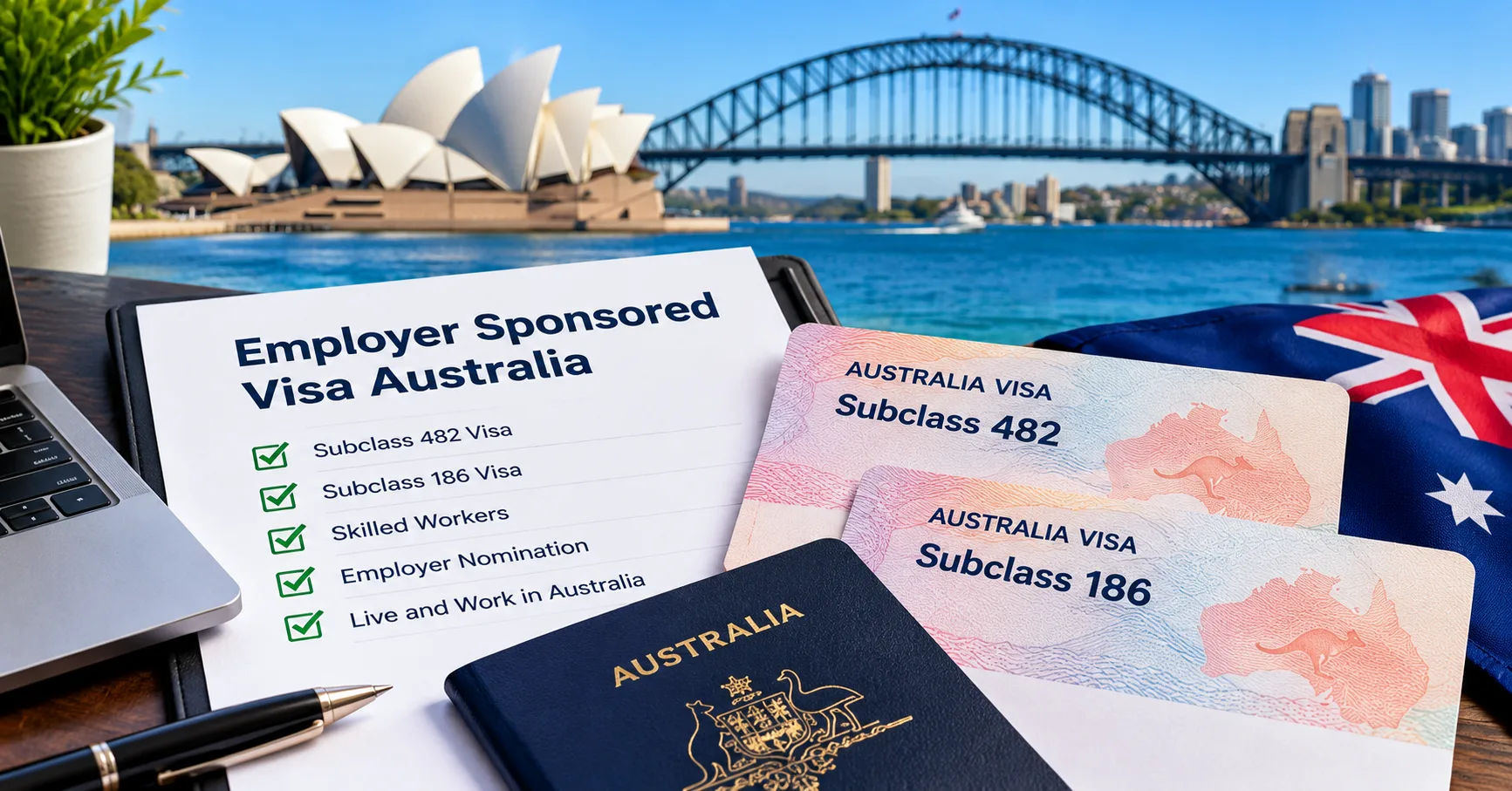 For many skilled workers, applying onshore offers a practical way to pursue permanent residency without leaving Australia. However, being physically present in Australia does not automatically mean that an application will be approved or that every applicant can use every available pathway.
Understanding how the subclass 186 visa works, which requirements apply, and what to prepare before submitting an application can help applicants make informed decisions. This guide explains the onshore application process, eligibility requirements, employer obligations, common challenges, and important considerations for people seeking Australian permanent residency.
The Subclass 186 Visa
The Employer Nomination Scheme visa, commonly known as the subclass 186 visa, is an Australian permanent residence visa for eligible skilled workers who are nominated by an approved Australian employer.
It allows successful applicants to live and work permanently in Australia, subject to the visa's rules and the conditions of any relevant professional registration or licensing requirements.
Unlike some temporary work visas, this visa is designed to provide a pathway to permanent residency. It can be suitable for skilled employees whose employers want to retain their services over the longer term.
The visa has different streams, and each has its own requirements. Understanding these differences is essential before deciding whether to apply from within Australia.
The Three Main Visa Streams
1. Temporary Residence Transition stream
This stream is intended for eligible workers who have worked for their sponsoring employer under qualifying temporary work arrangements. Applicants must satisfy the applicable employment, nomination, and other visa requirements.
2. Direct Entry stream
This stream is designed for eligible skilled workers who meet the relevant skills, qualifications, work experience, and other requirements. Depending on the occupation and circumstances, a formal skills assessment may be required.
3. Labour Agreement stream
This stream applies to workers nominated by employers operating under an applicable labour agreement with the Australian Government. The agreement determines relevant occupation and sponsorship arrangements, as well as any permitted concessions.
The appropriate stream depends on the applicant's employment history, occupation, qualifications, and employer's circumstances.
Can You Apply for a Subclass 186 Visa While in Australia?
Yes. You can generally apply for a subclass 186 visa while you are physically in Australia, provided you meet the requirements of the relevant stream and the rules governing onshore applications.
The Australian Department of Home Affairs allows eligible applicants to apply from inside or outside Australia. However, if you apply onshore, you must generally hold a substantive visa or a qualifying Bridging Visa A, Bridging Visa B, or Bridging Visa C. You also cannot be in immigration clearance when applying.
This distinction matters because your current immigration status can affect whether you are legally permitted to lodge the application in Australia.
For example, a skilled worker holding a qualifying temporary work visa may be able to apply through the Temporary Residence Transition stream after meeting the relevant employment requirements. Another worker may qualify for the Direct Entry stream if they satisfy its separate occupation, experience, and skills requirements.
What Does Onshore Application Mean?
An onshore application means that you submit your visa application while you are physically present in Australia.
You do not necessarily need to leave Australia to apply for permanent residency. If you meet the relevant conditions, you can submit the application online through ImmiAccount and provide the required supporting documents.
Your application may then be processed while you remain in Australia, provided you continue to comply with the conditions of your current visa and any subsequent bridging visa.
It is important to understand that applying onshore does not automatically grant permanent residency. The Department of Home Affairs must assess your application and confirm that all applicable requirements have been met.
Can You Apply From Any Temporary Visa?
Not necessarily. Your current visa type and conditions are important.
Some applicants may hold a substantive visa that permits an onshore application. Others may hold a bridging visa that qualifies for the relevant application rules.
However, certain visa conditions can restrict further applications in Australia. A condition such as No Further Stay may prevent you from lodging another substantive visa application unless an applicable exception or waiver is available.
Before applying, check your visa grant letter and your current visa details through the Australian Government's Visa Entitlement Verification Online service, commonly called VEVO.
If your circumstances are complicated, obtain advice from a registered migration agent or Australian immigration lawyer before lodging an application.
Eligibility Requirements for an Onshore Application
Being in Australia is only one part of the process. Applicants must also satisfy the eligibility requirements of their chosen stream.
Although individual criteria vary, several important considerations apply to the subclass 186 visa.
1. Employer Nomination
You must have an eligible Australian employer willing to nominate you for an appropriate position.
The employer must meet the relevant requirements, including operating lawfully and actively in Australia. The nominated position must also satisfy the applicable rules.
An employer's willingness to offer you a job does not automatically mean that the nomination will be approved. The Department may assess the genuine nature of the position, the employer's circumstances, and whether the nomination meets the relevant requirements.
2. Relevant Skills and Qualifications
Your skills and qualifications must match the nominated occupation and the requirements of the selected stream.
For the Direct Entry stream, applicants generally need at least three years of relevant work experience, unless an exemption applies. A positive skills assessment is also generally required before applying, unless the applicant qualifies for an exemption.
The Temporary Residence Transition stream has different requirements, which focus on eligible sponsored employment and other relevant criteria.
Check the official requirements for your particular stream rather than assuming that experience accepted for one visa will automatically satisfy another.
3. Age Requirements
Applicants generally need to be under 45 years old when applying.
However, certain exemptions may apply to eligible applicants, including some academic, scientific, and other specified categories. Some exemptions depend on the applicant's visa history and employment circumstances.
If you are approaching 45, it is particularly important to establish whether you meet the age requirement or qualify for an exemption before submitting an application.
4. English Language Proficiency
Applicants generally need to demonstrate the required level of English language proficiency.
The precise rules depend on the stream and any applicable exemptions. For example, the Direct Entry stream generally requires at least Competent English, while the Temporary Residence Transition stream also has its own English language requirement.
You may need to provide evidence through an accepted English language test or another form of evidence permitted by the applicable rules.
Do not assume that previous study in Australia or employment in an English-speaking workplace automatically satisfies the requirement.
5. Health and Character Requirements
Applicants must meet the applicable health and character requirements.
Depending on your circumstances, you may need to complete medical examinations, provide police certificates, or submit additional information.
Family members included in the application may also need to satisfy relevant requirements.
Providing accurate information and responding promptly to requests from the Department can help prevent unnecessary delays.
The Department of Home Affairs provides the current criteria for each stream on its official website.
Applying Onshore Through the Temporary Residence Transition Stream
For eligible temporary sponsored workers, the Temporary Residence Transition stream is an important pathway to permanent residency.
It is particularly relevant to people who have worked for an Australian employer under qualifying subclass 457 or subclass 482 arrangements.
Employment History Requirements
Applicants generally need to have completed at least two years of eligible full-time sponsored employment during the three years immediately before applying.
The employment must meet the relevant requirements, including being undertaken in Australia under qualifying visa arrangements and in an eligible occupation.
Not every period of employment automatically counts. Unpaid leave, changes of employer, changes in occupation, and the timing of nomination applications may affect how employment is assessed.
For this reason, keep detailed records of your employment dates, visa grants, approved nominations, payslips, and any changes in your work arrangements.
Nomination by Your Employer
The employer must nominate you under the appropriate stream.
For the Temporary Residence Transition stream, the nomination must generally be approved within the six months before you apply. The employer must also satisfy the relevant sponsorship and business requirements.
Discuss the timing with your employer well in advance. If your temporary visa is approaching expiry, you should not assume that a future nomination will automatically protect your immigration status.
Who May Benefit From This Stream?
This pathway may suit workers who have built an established employment relationship with their sponsoring employer and satisfy the required conditions.
For example, a worker who has spent the required period in eligible sponsored employment may be able to seek permanent residency through this stream if the employer nominates them and all other criteria are met.
However, meeting the employment period alone is not enough. The applicant must also satisfy the applicable age, English, health, character, and other requirements, unless a specific exemption applies.
Applying Onshore Through the Direct Entry Stream
The Direct Entry stream may suit skilled workers who qualify for employer-sponsored permanent residency without relying on the Temporary Residence Transition pathway.
You may be eligible even if you have not completed the required period of sponsored employment for the transition stream.
However, the Direct Entry stream has its own requirements, and the fact that you are already employed in Australia does not remove them.
Occupation and Skills Assessment
Your nominated occupation must meet the applicable occupation-list requirements. The Department's current guidance identifies the Core Skills Occupation List for the Direct Entry stream.
Most applicants also need a positive skills assessment from the relevant assessing authority, unless an exemption applies.
The assessment considers whether your qualifications and professional experience meet the standards for your nominated occupation. It is important to ensure that your evidence corresponds to the occupation and the applicable assessment requirements.
Relevant Work Experience
Applicants generally need at least three years of relevant work experience unless exempt.
Your work history should clearly demonstrate the tasks you performed, the length of your employment, and how your experience relates to the nominated occupation.
Useful evidence may include employment references, contracts, payslips, tax documents, and other records that substantiate your claims.
When Is Direct Entry Worth Considering?
This stream may be appropriate for a skilled worker whose Australian employer is prepared to nominate them but who does not qualify for the Temporary Residence Transition stream.
However, you should compare both pathways before making a decision. Your current visa, employment history, occupation, skills assessment, and age may influence which option is available to you.
The official Direct Entry guidance sets out the applicable requirements and exceptions.
Step-by-Step Process for Applying Onshore
Once you have established that you can apply from within Australia, the next step is to prepare a complete application.
Step 1: Check your current visa
Review your visa status, expiry date, and conditions. Confirm that you are permitted to lodge an onshore application and identify any restrictions that may affect your eligibility.
Step 2: Confirm employer nomination
Discuss the proposed position with your employer. Make sure the business understands its responsibilities and that the nomination meets the applicable requirements.
Step 3: Gather supporting documents
Prepare your passport, employment records, qualifications, English evidence, skills assessment if required, and relevant family documents. Arrange health examinations and police certificates when instructed or required.
Step 4: Lodge through ImmiAccount
Complete the application carefully, upload the necessary evidence, and pay the applicable visa application charge. Ensure that the information matches the supporting documents.
Step 5: Monitor your application
Check your ImmiAccount regularly, respond to requests for additional information, and maintain lawful immigration status while the application is being processed.
The employer's nomination must be approved before the visa can be granted. Applicants should also ensure that their visa application is lodged within the applicable nomination validity period.
What Happens After You Apply Onshore?
After submitting your application, you will receive confirmation and can monitor its progress through ImmiAccount.
If you are eligible, you will generally be granted a bridging visa associated with your application. This may allow you to remain in Australia if your current substantive visa expires before a decision is made.
However, a bridging visa does not automatically give you unrestricted work or travel rights. Its conditions depend on your circumstances and the particular bridging visa granted.
Before travelling overseas, check whether you need a Bridging Visa B to return to Australia lawfully. Do not assume that an ordinary bridging visa permits re-entry after departure.
You must also continue complying with any visa conditions that apply to you. If your employment, family circumstances, passport details, or other relevant information changes, notify the Department as required.
Processing times vary according to the application, the stream, and the Department's priorities. A complete application with well-organised evidence may help avoid delays caused by missing documents, but it cannot guarantee a particular decision date.
Common Mistakes to Avoid
Applicants can make their process more difficult by overlooking basic requirements.
Assuming every visa holder can apply onshore: Your current visa conditions and immigration history must be checked before lodging.
Choosing the wrong stream: The Direct Entry and Temporary Residence Transition streams have different eligibility criteria. Select the pathway that matches your circumstances.
Relying on incomplete employment records: Keep evidence of your employment dates, duties, salary, and sponsored work arrangements.
Ignoring nomination deadlines: Make sure your application is lodged within the applicable period after nomination approval.
Providing inconsistent information: Differences between application answers, employment references, and official records can lead to requests for clarification or other problems.
Leaving Australia without checking travel rights: Understand the conditions of your bridging visa and the requirements for returning to Australia before making travel arrangements.
Taking time to check these matters can reduce avoidable complications.
Benefits of Applying Onshore
For eligible applicants, applying from within Australia can provide several practical advantages.
First, you may be able to continue living in Australia while your application is processed, subject to your visa status and applicable conditions.
Second, your existing employment records, professional experience, and relationship with your sponsoring employer may help demonstrate that you meet the relevant requirements.
Third, if your application is approved, the subclass 186 visa provides permanent residency. Eligible holders can live, work, and study in Australia indefinitely and may access Medicare, subject to the applicable rules.
Permanent residents may also become eligible to apply for Australian citizenship if they meet the separate citizenship requirements. Citizenship is not automatic upon receiving permanent residency.
Conclusion
Yes, you can generally apply for the subclass 186 visa onshore if you are in Australia and meet the relevant immigration and eligibility requirements. The Australian Government permits eligible applicants to apply from within the country, but your current visa status, visa conditions, employer nomination, and chosen stream all matter.
The Temporary Residence Transition stream may suit eligible workers who have completed the required period of sponsored employment. The Direct Entry stream may be suitable for applicants who meet its occupation, skills, and work experience requirements. The Labour Agreement stream is available where the relevant employer and agreement arrangements apply.
Before submitting an application, check your current visa conditions, confirm that your employer can nominate you, and prepare evidence of your qualifications, employment, English proficiency, and other required criteria. If your circumstances involve a No Further Stay condition, a bridging visa, a previous refusal, or uncertainty about your eligibility, consider obtaining advice from a registered migration agent or Australian immigration lawyer.
With careful preparation and a clear understanding of the applicable rules, eligible skilled workers can pursue permanent residency without necessarily leaving Australia to lodge their application. Always consult the latest Department of Home Affairs guidance before making a decision, because visa requirements and processing priorities can change.