
Why Your Shopify Store Needs Custom 2.0 Development(Not Another App)
If your salt away feels slow, looks like every other dropshipping site, and you’re gainful for a dozen apps just to get basic features working the problem usually isn’t your products. It’s your theme architecture.
The Real Cost of”App Stack” Stores
Most Shopify Shopify theme customization s lean on third-party apps for everything: cart shorts, size charts, upsells, swatch pickers. Each app adds its own JavaScript file, and most of it wads whether a shopper needs it or not. The lead is certain stores that take 4-5 seconds to load, feel slow on mobile, and softly leak conversions before a visitant even sees the production.
There’s a second, subtler cost too: sameness. When every lay in runs the same three or four nonclassical themes with the same app widgets barred on, nothing about the storefront signals that this denounce is different or reliable. Generic design erodes the confidence that turns a web browser into a vendee.
A Different Approach: Native Liquid 2.0 Architecture
Custom Shopify 2.0 solves both problems at the germ.
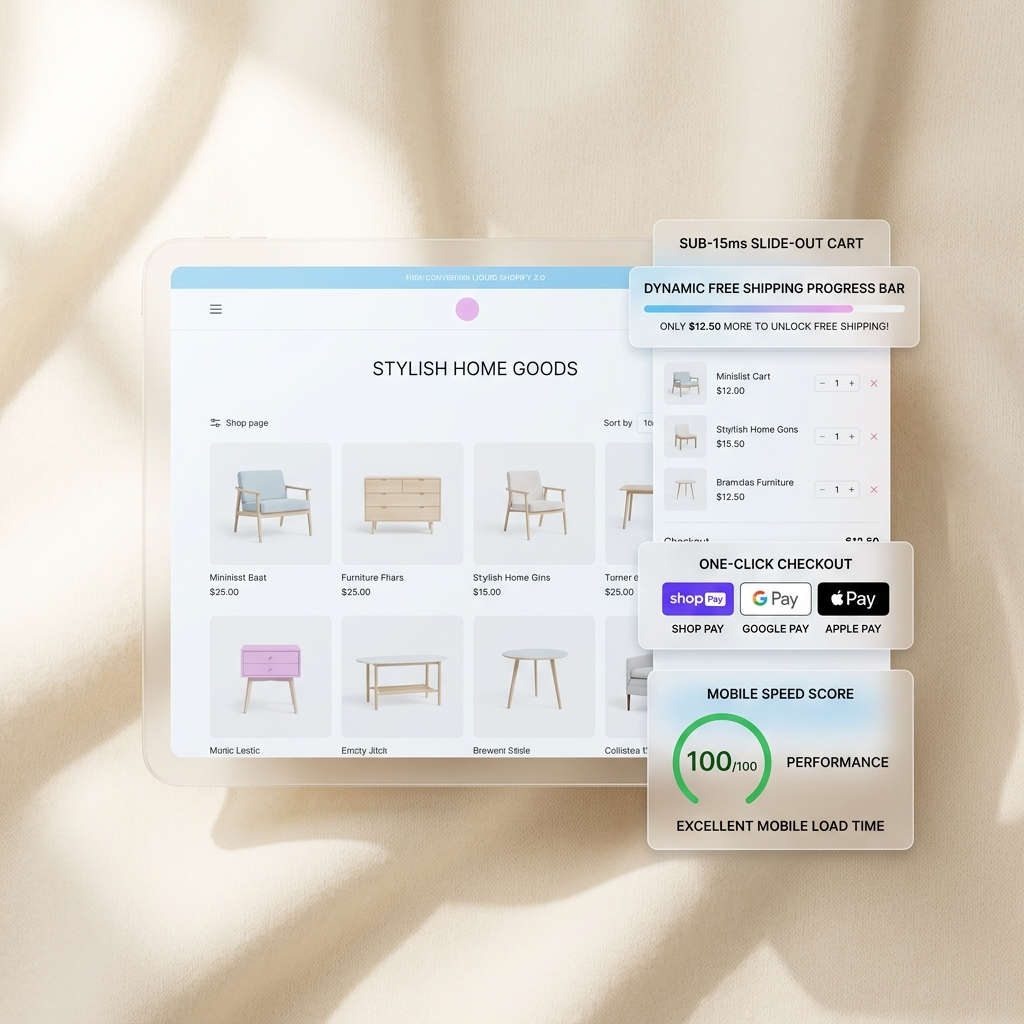
Instead of stacking apps, features like slither-out cart drawers, bed free-shipping advance bars, in-cart upsells, size charts, and product tabs get hard-coded straight into indigen Liquid. No yield-blocking scripts, no every month subscriptions for what should be staple functionality, and quicker load times the kind that gets a lay in into the 90-100 PageSpeed straddle instead of the 50s and 60s.
On the design side, this also substance the storefront can actually look like the denounce it belongs to. Bespoke product bundles, interactive swatch pickers, and a attribute UI shapely around how the products are actually sold not a generic template flexible to fit.
What This Actually Looks Like in Practice
A well-built usage Shopify 2.0 theme typically includes:
- Instant Ajax cart boxershorts no full-page reloads, with built-in upsell and transport-progress logic
- Modular section computer architecture merchants and merchandising teams can still rearrange pages in the Theme Editor without touch code
- Mobile-first performance AVIF fancy formatting, indispensable CSS inlining, zero blocking scripts
- Dynamic product options swatch pickers, multi-pack measure tiers, and live price updates shapely natively
The meaningful detail here is the third one: custom doesn’t mean locked-in. Native Liquid 2.0 sections still give the put in owner’s team full drag-and-drop verify in the Theme Editor. The code is custom; the day-to-day editing isn’t.
Why Speed and Design Aren’t Separate Conversations
It’s tantalising to treat”make it fast” and”make it look good” as two different projects. In practise, they’re the same see. A cart that opens outright and a swatch selector that updates damage live aren’t just performance wins they’re trust signals. Shoppers record friction even when they can’t name it, and a store that responds in a flash plainly feels more credulous than one that stutters.
What a Store Owner Walks Away With
A proper usage establish isn’t just a live topic it’s a package: the production-ready subject file, a full Figma UI kit for futurity plan work, a grooming video recording so the internal team isn’t dependant on a for every modest transfer, and full commercial message ownership of the code. No IP left behind with the delegacy.
The Bottom Line
Apps are useful for a lot of things. They’re not a substitute for a shopfront well-stacked to actually perform fast by default, distinct by plan, and editable without a developer on servant. For stores that reckon on conversion rate rather than dealings intensity alone, that difference shows up direct in tax revenue.
Typical turnround: 2-3 weeks Target benchmark: 99 PageSpeed Score Reported bear upon: up to 44 transition rate